Read Time: 8 min
As August arrives in Pennsylvania, motorcycle enthusiasts take full advantage of warm summer weather, cruising along the scenic country roads of Chester County, Lancaster County, and beyond. However, peak riding season also brings heightened road hazards. Loose gravel kicked up from highway construction, debris on rural backroads, or an unexpected tip-over in a parking lot can leave your motorcycle’s fuel tank or fender with an unsightly ding.
For riders who take pride in their bike’s original custom paint job or rare OEM factory finish, traditional bodywork, which involves sanding, filling, and repainting, can be nerve-wracking and expensive.
Fortunately, motorcycle paintless dent repair (PDR) provides a specialized, non-invasive solution that removes dings without disturbing your factory paint. In this guide, we break down how motorcycle PDR works, why it requires specialized technique, when it’s the ideal repair option, and how to preserve your bike’s long-term value and beauty.
TL;DR / Quick Summary
Motorcycle paintless dent repair (PDR) uses precision pushing and glue-pulling techniques to remove dings from gas tanks and fenders without sanding, fillers, or repainting, preserving 100% of your factory finish.
Key Takeaways:
- Preserves Original Paint: Protects custom airbrushing, pin-striping, and original OEM factory graphics.
- Efficient Turnaround: Offers significantly faster completion than traditional body shop paint and refinishing work.
- Requires Specialized Skill: Motorcycle fuel tanks present complex curves and varied metal gauges requiring specialized leverage tools and optics.
- Ideal for Intact Paint: Best for shallow dings, helmet drops, and gravel impacts where the clear coat is undamaged.
What Is Motorcycle Paintless Dent Repair (PDR)?
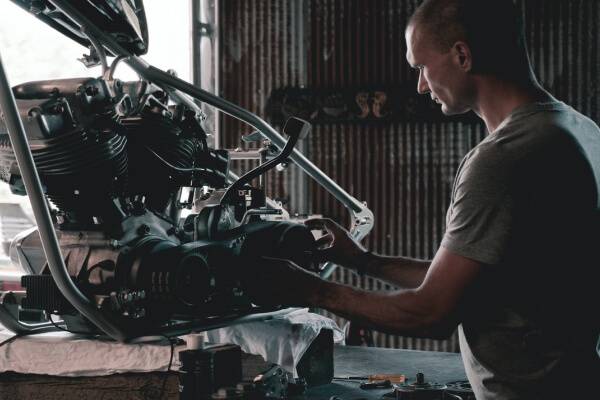
Paintless Dent Repair (PDR) is an advanced auto body restoration technique designed to massage metal back to its original factory contour without damaging the vehicle’s paint. While PDR has long been a staple for hail repair and door dings on passenger cars, PDR for motorcycles has developed into a dedicated craft tailored to the unique geometry, access points, and metal characteristics of motorcycle tanks and fenders.
By utilizing specialized hand tools, precision LED reflection boards, and controlled micro-pressure, certified technicians can eliminate dings from the underside or exterior of the panel, leaving no trace of the damage behind. Check out some of our previous work here.
How Motorcycle PDR Works: Step-by-Step
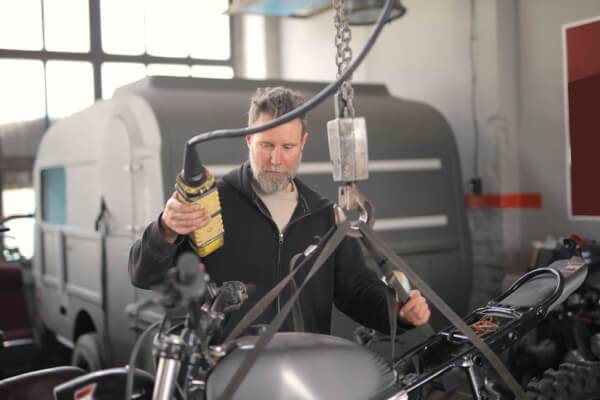
Performing motorcycle dent removal requires patience, extreme precision, and specialized equipment. Unlike large, accessible car panels, motorcycle gas tanks present limited entry access, internal baffles, and complex curved structures.
If you’re curious about the technical execution, here is how certified technicians approach the process:
- Inspection & Paint Integrity Assessment: The technician examines the dent under high-intensity reflection lights to ensure the paint film and clear coat are intact and uncracked.
- Access & Dismounting: The fuel tank or fender is dismounted from the frame and secured into a specialized holding bench. Internal access is gained through the fuel cap opening, fuel pump access port, or underside mounting channels.
- Optics Setup: Using specialized LED optics, reflection lines are projected onto the curved paint surface. Distortions in the lines reveal the exact depth, crown, and boundaries of the dent.
- Precision Micro-Pushing & Glue Pulling: Custom curved steel rods massage the metal from inside the tank outward in minute increments. When internal access is obstructed by baffles, specialized cold-glue tabs pull the dent out from the exterior without harming the clear coat.
- Final Polishing & Reassembly: Once the metal memory is fully restored and the reflection lines run perfectly straight, the panel is polished and remounted onto the bike.
Motorcycle PDR vs. Automotive PDR: Unique Challenges
While the underlying philosophy of PDR remains consistent across vehicles, PDR on motorcycles presents distinct challenges:
| Feature | Passenger Cars | Motorcycles (Tanks & Fenders) |
| Substrate & Gauge | Uniform sheet metal or aluminum panels | Variable steel gauges, aluminum, or composite materials by model |
| Surface Geometry | Flat or wide compound curves | Complex tight radii, steep crowns, and deep concaves |
| Access Points | Open door cavities, trunk lids, hood undersides | Small fuel filler necks, internal baffles, dual-walled structures |
| Paint Characteristics | Standard production automotive clear coats | Multi-stage metallic, airbrushed, or custom clear coats |
Because motorcycle fuel tanks feature heavier construction and tighter curves than standard car panels, pushing out a dent requires far greater leverage control and specialized metallurgical skill than standard car door bodywork.
When Is PDR the Right Choice for Your Motorcycle?
Paintless dent repair is the preferred choice when specific conditions are met:
- The Factory Paint Is Intact: There are no deep scratches, chips, or spiderweb cracks through the clear coat or primer.
- Minor Dings and Shallow Impressions: Handlebar impacts, stray gravel dings, helmet drops, or garage bumping damage.
- Preserving Original Custom/OEM Graphics: Rare Harley-Davidson, Indian, Triumph, or custom airbrushed tanks where repainting would destroy the original artistry or reduce resale value.
- Faster Turnaround Needed: Avoids extended downtime in a paint booth and drying ovens.
What You Can Handle vs. When to Call a Pro
Understanding what you can inspect at home versus what requires specialized auto body equipment helps set realistic expectations and protects your bike.
Tasks Most Motorcycle Owners Can Do
- Visual Surface Inspection: Wipe down the tank with a microfiber cloth and check for clear coat cracks, chips, or exposed bare metal using a bright flashlight.
- Draining Fuel for Repair Prep: Safely drain the fuel tank into an approved container prior to taking the tank in for dismounted service.
Tasks for Confident DIYers
- Dismounting the Fuel Tank: Removing seat bolts, fuel line quick-connects, vent hoses, and electrical connectors to isolate the tank for transport.
When to Call a Professional
- Massaging or Pulling Metal: Never attempt DIY suction cups, hot water tricks, or dry ice on motorcycle tanks. Tank metal resists simple pulling, and improper pressure can split your clear coat or stretch the metal permanently.
- Red flags requiring immediate professional attention: Cracks in the paint along the dent perimeter, creased metal seams near fuel line welds, or fuel weeping from the dent area.
Common Motorcycle Dent Repair Mistakes to Avoid
1. Using DIY Dent Removal Kits
What people do wrong: Purchasing retail suction plunger kits or hot-melt glue pullers designed for thin car doors.
Why it’s a problem: Motorcycle tanks feature significantly stiffer geometry and varied metal thickness. Generic pullers lack the strength and precision required, often snapping glue tabs or pulling high spots into the tank crown.
The right approach: Have a certified PDR technician assess the substrate and apply professional-grade leverage or cold-glue pulling tools.
2. Heating the Paint with a Heat Gun Uncontrolled
What people do wrong: Applying direct heat from an industrial heat gun to “soften” the metal or paint before pushing.
Why it’s a problem: Excessive heat burns multi-stage clear coats, discolors custom pearl pigments, and creates dangerous vapor ignition hazards near fuel tanks.
The right approach: Professional PDR technicians use precise thermal monitoring to maintain clear coat elasticity safely without damaging the finish.
Late Summer Riding & Gravel Roads: Why August Is Peak Season for Tank Dings
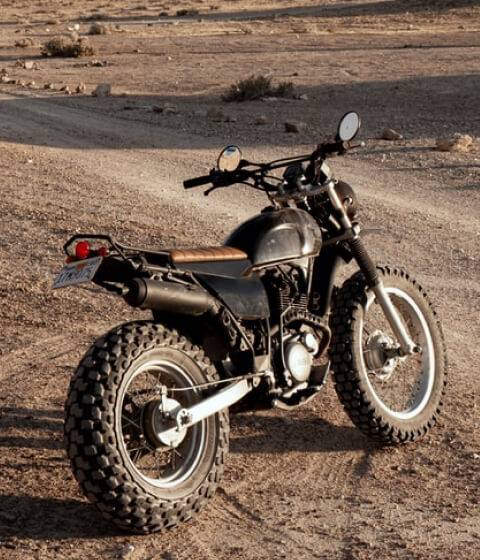
August is prime motorcycle season in Pennsylvania, but it also brings unique seasonal hazards:
- Road Work & Fresh Tar/Gravel: Highway maintenance teams frequently apply chip-seal and loose gravel treatments to rural roads during late summer.
- High-Speed Debris: Heavy summer traffic kicks up pebbles and debris on major thoroughfares like Route 30, Route 41, and I-76.
- Touring & Luggage Wear: Loading heavy saddlebags, straps, or magnetic tank bags during extended weekend trips increases the likelihood of accidental surface impacts.
Checking your tank and fenders after long summer rides allows you to address small dings promptly before minor surface tension causes paint stress over time.
Key Benefits of Choosing PDR for Your Bike
- 100% Value Retention: Retaining your original OEM finish keeps classic and modern bikes at peak market value.
- Zero Color Mis-Matching: Avoids the headache of trying to match complex pearl, candy, or metallic paint hues.
- Environmentally Friendly: PDR requires no bondo, fillers, primers, or chemical solvents.
- Cost Efficiency: Eliminates expensive paint materials and intensive refinishing labor compared to conventional body work.
Conclusion
A ding in your fuel tank or fender doesn’t have to mean costly repainting or extended downtime during peak riding season. Motorcycle paintless dent repair offers a precise, non-invasive way to erase dings while protecting your factory graphics, paint integrity, and resale value.
At Barry’s Collision Repair, we’ve been handling collision damage, frame alignment, and specialized paintless dent removal across Chester County and Central Pennsylvania for decades. Generally, the dings riders regret most are the ones left untreated until rust or paint stress sets in. If you’re not sure whether your tank’s dent is a candidate for PDR, we’re always happy to evaluate it for you. Schedule an appointment today.
Serving Parkesburg, Coatesville, Atglen, Christiana, Gap, and the surrounding Chester County region.
Frequently Asked Questions
Can a dent in a motorcycle gas tank always be fixed with PDR?
No, not every dent qualifies. PDR requires intact paint and metal that hasn’t been severely stretched or creased along a sharp seam. An in-person optical inspection will confirm whether your tank is an ideal candidate.
Do I need to drain my gas tank before bringing it in for PDR?
Yes, fuel should be drained for safety and tool access. Draining the tank eliminates vapor hazards and allows specialized PDR rods full internal access through the filler neck or fuel pump housing.
Will PDR harm my custom graphics or clear coat?
No, professional PDR preserves your clear coat completely. The process applies gradual, calculated pressure that respects the natural flexibility of modern automotive clear coats and factory graphics without scratching or lifting.
How long does motorcycle paintless dent repair take compared to body shop refinishing?
PDR is significantly faster than traditional refinishing. Because PDR eliminates body filler drying, priming, sanding, and clear coat curing times, repair turnaround is streamlined to get your bike back on the road promptly.
Is PDR less expensive than traditional bodywork and repainting for a motorcycle tank?
Yes, PDR is generally more cost-effective than conventional bodywork. By eliminating paint materials, color-matching labor, and spray booth time, PDR provides significant cost savings while preserving your OEM finish. Get a free photo estimate on our website.
Sources
- National Highway Traffic Safety Administration (NHTSA) — Motorcycle Safety — Guidelines on vehicle maintenance, structural integrity, and road hazard safety.
- PA Department of Transportation (PennDOT) — Vehicle Equipment & Inspection Regulations — Pennsylvania state guidelines for motorcycle inspections.