Read Time: 7 min
The moments following a motorcycle accident are often a blur of adrenaline and stress. Unlike a standard fender bender between two passenger cars, a motorcycle collision involves unique mechanical complexities and safety considerations that require immediate, specialized attention. Whether it was a low-side slide or a direct impact, the steps you take in the first 48 hours determine both the success of your insurance claim and the future safety of your bike.
At Barry’s Collision Repair of Parkesburg, we’ve been helping Pennsylvania riders get back on the road since 1973. We understand that for a rider, a bike isn’t just a vehicle—it’s a precision machine that requires generational craftsmanship to restore. This guide outlines the essential post-accident protocol to protect your health, your investment, and your right to a high-quality repair.
TL;DR / Quick Summary
This guide provides a comprehensive roadmap for riders navigating the aftermath of a collision, from on-scene safety to choosing a specialized repair facility.
Key Takeaways:
- Prioritize immediate medical evaluation and scene documentation for insurance purposes. Never attempt to ride a bike with suspected frame or fork damage.
- Understand the difference between cosmetic “scuffs” and structural integrity issues.
- Choose a repair shop with specific experience in motorcycle frame alignment and fairing repair.
Assessing the Damage: More Than Meets the Eye
When a motorcycle goes down, the damage is rarely just “skin deep.” While a car has a bumper and a frame to absorb impact, a motorcycle’s vital components, engine cases, forks, and the frame itself, are often exposed.
Structural vs. Cosmetic Damage
It is easy to get distracted by shattered fairings or a dented fuel tank, but the most critical issues are often invisible to the naked eye. A hairline crack in a cast aluminum frame or a slightly bent front fork can make a motorcycle unstable at highway speeds. During our collision repair process, we utilize precision measuring tools to ensure the geometry of your bike is returned to factory specifications.
The Danger of “Hidden” Fluid Leaks
Even a minor tip-over can crack an engine cover or pinch a brake line. Before you even think about starting the engine, check for:
- Puddles of oil or coolant: Signals a cracked case or radiator.
- Spongy brakes: Indicates air in the lines or a leaking master cylinder.
- Fuel odors: A compromised tank or fuel line is an immediate fire hazard.
What You Can Handle vs. When to Call a Pro
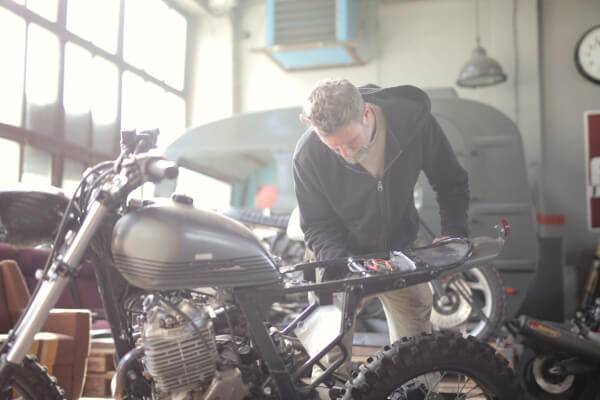
Riders are notoriously hands-on, but knowing where to draw the line between a DIY fix and professional restoration is vital for your safety.
Tasks Most Riders Can Do
- Cosmetic Cleaning: Removing road grime to better inspect for scratches.
- Replacing Bolt-on Accessories: Swapping out a broken mirror or a bent footpeg (if the mounting point is undamaged).
Tasks for Confident DIYers
- Fairing Removal: Taking off damaged plastics to inspect the subframe for cracks.
- Battery Testing: Ensuring the electrical system wasn’t shorted during the slide.
When to Call a Professional
- Frame and Fork Inspection: Any impact involving the front end requires a professional alignment check.
- Fuel Tank Repair: Dented tanks require specialized “paintless” techniques or professional sealing to prevent internal rust.
Red flags requiring immediate professional attention:
- The handlebars are not straight when the wheel is centered.
- There is a “notchy” feeling when turning the bars from lock to lock.
- Visible cracks in the welds of the frame.
- Any fluid leaking from the front or rear suspension.
Common Post-Accident Mistakes to Avoid
In our experience, the mistakes made after the accident can be just as damaging as the collision itself.
1. Riding the Bike Home
What people do wrong: Assuming that because the engine starts, the bike is “fine” to ride a few miles home.
Why it’s a problem: A bent frame or compromised tire bead can fail catastrophically under load, leading to a second accident.
The right approach: Always have the bike towed. We offer towing assistance to ensure your motorcycle reaches our Parkesburg facility without further risk.
2. Accepting the First Insurance Estimate
What people do wrong: Allowing an insurance adjuster (who may only be trained in passenger cars) to dictate the repair cost.
Why it’s a problem: Adjusters often miss specialized motorcycle components like aftermarket exhaust systems or custom paint.
The right approach: Get a detailed teardown estimate from a shop that understands motorcycle-specific labor rates and parts sourcing. Read more about how we navigate your insurance claims here.
Conclusion
Recovering from a motorcycle accident is a process that requires patience and expertise. By documenting the scene, prioritizing your safety over “limping” the bike home, and choosing a repair partner with a 50-year legacy of integrity, you ensure that your bike returns to the road in peak condition. Whether you need a free photo estimate or a full structural restoration, our team is here to help.
Serving Parkesburg, Coatesville, Atglen, and the surrounding Pennsylvania area.
If you have questions about your motorcycle’s safety after a slide, give us a call at +1 (610) 593-2775 or visit us at 4073 Lower Valley Rd. We’ve been the trusted name in local repairs since 1973, and we’re ready to get you back on two wheels.
Frequently Asked Questions
Can a bent motorcycle frame be safely repaired?
In many cases, yes, but it depends on the material and the severity of the bend. Steel frames can often be straightened using specialized jigs, while cast aluminum frames are more likely to require replacement if they are cracked. A professional inspection is mandatory to determine if the structural integrity can be guaranteed.
How much does motorcycle collision repair typically cost?
Costs vary wildly based on the bike type. A minor low-side on a fairing-heavy sportbike can cost $2,000–$4,000 in plastics alone, while a cruiser might see higher costs in chrome and tank work. According to industry data, the average motorcycle insurance claim for a collision is approximately $3,500, though structural damage can quickly exceed the bike’s total value.
Will my insurance cover aftermarket parts?
Most standard policies cover up to $1,000 in “custom parts and equipment” (CPE). If you have high-end exhaust, luggage, or custom paint, you should provide receipts to your repair shop so they can advocate for the full replacement value with your adjuster. See our FAQ section for more details.
How long does a typical motorcycle repair take?
A standard repair usually takes 2–4 weeks. The primary bottleneck is often parts availability, especially for older models or imported brands. At Barry’s, we provide a clear timeframe once the initial teardown and insurance approval are complete.
Should I replace my helmet after a minor accident?
Yes. Helmets are designed for a single impact. Even if there are no visible cracks, the internal EPS liner compresses to absorb energy during a fall. Once that liner is compressed, the helmet can no longer protect you in a subsequent impact. According to the Snell Memorial Foundation, any helmet involved in an accident should be replaced immediately.
Sources:
- Snell Memorial Foundation — Standards and guidance on motorcycle helmet replacement after impact.
- Pennsylvania Department of Transportation (PennDOT) — Official state resources for motorcycle safety and regulations.